The Keys in the Bowl: How Faith Alive UMC Turned Ordinary Rides Into Extraordinary Care
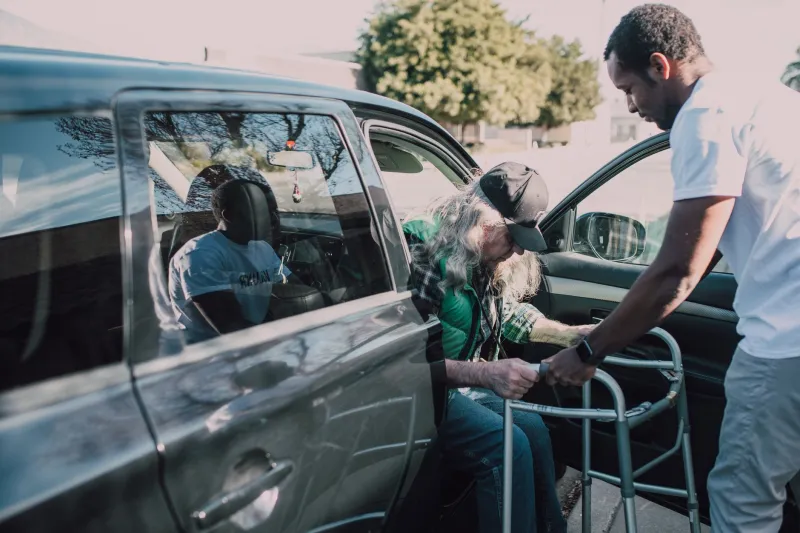
On a gray Tuesday morning in November, a silver minivan rolls into the Faith Alive UMC parking lot ten minutes early. The driver, a retired school bus mechanic named Ray, leaves the engine running and checks his phone. He is not waiting for a family member. He is waiting for Miss Alma, an 86-year-old member who needs a ride to a cardiology appointment across town.
Ray has done this run a dozen times. He knows Miss Alma likes the heat on low, prefers the back roads to the highway, and will almost always ask him to stop at the pharmacy on the way home. He also knows that the twenty-minute drive is often the longest conversation she has all week.
“I just drive,” Ray said, shrugging. “But I’ve learned that driving is not always just driving.”
A Roster, Not a Program
The ministry has no official name. Most people around Faith Alive UMC simply call it the ride roster. It began a few years ago when the church office noticed a pattern: members were missing worship, doctor’s visits, and grocery runs not because they lacked faith or friends, but because they lacked a ride. A borrowed car, a suspended license, a bad hip, a cataract surgery—the reasons were ordinary and varied.
Carol Voss, a retired office manager who coordinates the schedule, said the first version was a paper list in the church office. Today it is a shared online calendar, a group text, and a bowl of keys on a table near the fellowship hall.
“We have about eighteen drivers who rotate,” Carol said. “Some do one ride a month. Some do three in a week. The point is not to burn anyone out. The point is to make sure nobody has to cancel a mammogram because they can’t find a lift.”
The roster covers three kinds of trips: medical appointments, grocery and errands, and Sunday worship. Drivers use their own vehicles, log miles for the church’s reimbursement fund, and follow a simple set of safety guidelines. The church office screens volunteers, checks driving records, and pairs newer drivers with experienced ones when a rider needs extra assistance.
The Gig Everyone Wants
What surprises Carol most is how popular the ministry has become. When she sends out a monthly sign-up link, the slots usually fill within a day. Retirees, parents with flexible schedules, and even a few college students have joined. One driver is a nurse who takes Tuesday mornings off. Another is a contractor who schedules his first client for 10 a.m. so he can make an early pharmacy run.
“People think it’s going to be depressing,” said Tasha, a pediatric nurse who has driven for two years. “It’s not. It’s the best part of my week. I get to hear someone’s story without rushing to the next thing. And I get to be useful in a way that doesn’t require a committee meeting.”
The ministry also has a low barrier to entry. A driver does not need to teach a class, lead a Bible study, or serve on a board. They need a valid license, a little patience, and an hour. For many volunteers, that simplicity is the draw. The ride roster asks for a concrete gift—time and a seat—and returns something harder to measure.
The Car as a Pastoral Room
Faith Alive UMC’s pastor, the Rev. Dana Whitfield, calls the ministry “pastoral care with a turn signal.” She said the car creates a kind of honesty that a fellowship hall sometimes cannot.
“In a car, you are side by side, not face to face,” Whitfield said. “That changes the conversation. People will say things they might not say across a table. They will tell you about a diagnosis, a fight with a daughter, a fear about money. The driver’s job is not to fix it. The job is to listen and to get them there safely.”
That listening has led to practical discoveries. Drivers have noticed when a rider’s refrigerator was empty, when a medication bottle was outdated, and when a member seemed more confused than usual. In each case, the driver did not become a case manager. They called the church office, and the care team followed up.
Miss Alma, for her part, said she appreciates the ride but values the company more. “Ray doesn’t fuss over me,” she said. “He just asks how I’m doing and then tells me about his tomatoes. That’s what I need. Somebody who treats me like a regular person.”
How to Start a Ride Ministry
For congregations considering something similar, Carol offers a few hard-won suggestions:
- Name one coordinator. A single point of contact keeps requests from falling through the cracks. The church office can hand off names and phone numbers, but someone needs to own the calendar.
- Start small. Begin with Sunday worship rides or one weekly errand day. Add medical appointments only after you have a reliable core of drivers.
- Screen volunteers. Use your denomination’s safe church policies, check driving records, and require proof of insurance. A background check is not a lack of trust; it is a form of care.
- Set clear boundaries. Drivers are not medical providers, financial advisers, or family therapists. They are transport and company. Give them permission to say no and to call the office when something feels beyond a ride.
- Reimburse miles. Even if volunteers refuse, offer it. It removes a hidden cost and signals that the ministry is valued.
- Ask riders what they need. Some want conversation. Some want silence. Some want the radio on. The ministry works best when the rider is treated as a person, not a passenger.
The silver minivan pulls back into the church lot just after noon. Ray helps Miss Alma out, waits until her front door is open, and then drives home for lunch. On the shared calendar, the next slot is already filled. It is not a glamorous ministry. But in a congregation that talks often about faith in action, the ride roster is one of the clearest examples we have: a key in the bowl, a seat saved, and a neighbor who does not have to stay home.