One More Plate: The Thanksgiving 2026 Habit That Starts With a Spare Chair
Thanksgiving 2026 is almost here. In kitchens across our community, people are already arguing about pie crust, checking airline prices, and wondering whether the turkey will fit in the oven. It is a week of preparation. But at Faith Alive UMC, a few families are preparing something else: a chair.
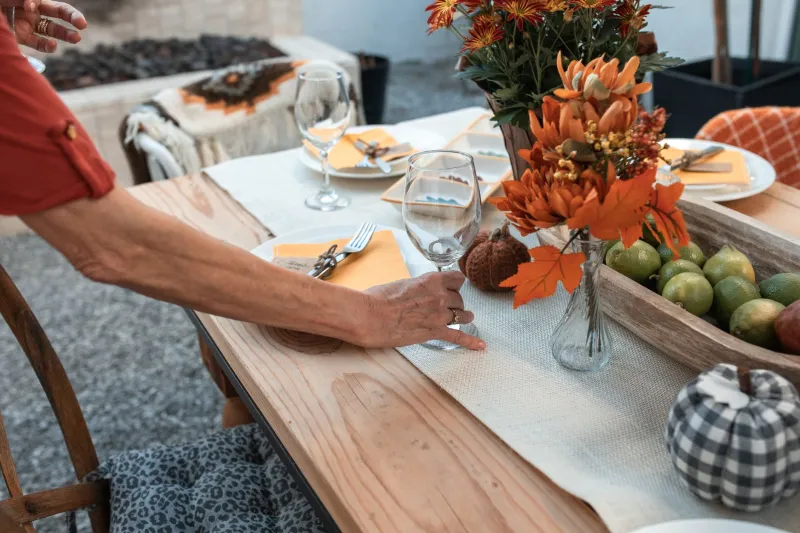
Not a folding chair dragged out at the last minute. A real chair, pulled up to the table on purpose. A plate, a napkin, a glass. A place set for someone who has not yet been invited.
We are calling it One More Plate. It is not a program. It is a habit.
The Chair Is Not a Decoration
The idea started with a simple question in a small group last fall: How many people in our church and neighborhood will eat Thanksgiving dinner alone this year? The answers were guesses, but the guesses were too high to ignore. A widow whose children live three states away. A college student whose family cannot afford a plane ticket. A neighbor who recently moved and does not yet know anyone’s name. A single parent who is working a double shift and will eat after the kids are in bed.
In the Methodist tradition, hospitality is not a nice extra. John Wesley preached that the world is our parish, and that faith is lived out in concrete acts of mercy. The table has always been a central image for us—open, shared, a little messy. We believe the communion table is open to all. It makes sense that our dining room tables should lean that way, too.
But setting an extra place is not about looking generous. It is about making room. It is a physical reminder that our homes and our lives are not closed circles. The extra chair says: there is space here. You do not have to earn it.
What It Looks Like in Practice
One More Plate is simple enough to try this week. Here is how a few Faith Alive UMC members are doing it.
Marta, a widow who lives near the church, is setting a place for her neighbor, a retired teacher she has waved at for years but never invited inside. “I was nervous,” she said. “I thought, what if she thinks I’m pitying her? But I just asked, ‘We’re having a small dinner. Would you like to join us?’ She said yes before I finished the sentence.”
Jordan, a sophomore at the local community college, is one of three students from the church’s campus ministry who will sit at the table of a family he barely knows. “My family is in Texas,” he said. “I was planning to eat ramen and watch football. This is better.”
The Okafors are setting an extra place for a woman from their apartment complex who recently lost her husband. They asked her directly, gave her an easy out, and offered to pick her up. She said yes, then called back to ask if she could bring a pie. “That was the moment I knew it was going to be fine,” Mrs. Okafor said. “She didn’t want to be a guest. She wanted to be part of it.”
A Short Blessing for the Extra Plate
If you try this, you may want a simple blessing. Here is one you can use or adapt:
God of the open table, thank you for this food and for the chair we did not fill by accident. Bless the one who sits here, and bless us with ears to listen. Make this table a little like your kingdom, where no one is a stranger and no one eats alone. Amen.
Practical Tips Before Thursday
If you are thinking about setting an extra place this Thanksgiving 2026, here are a few things we have learned:
- Ask directly. A vague “you should come by sometime” is easy to ignore. A clear invitation—“We are eating at 3 p.m. Would you like to join us?”—gives the other person a real choice.
- Offer an easy out. Say, “No pressure if you already have plans.” Hospitality should not feel like a trap.
- Ask about needs. Does your guest need a ride? A quiet corner? A vegetarian option? A chair with arms? Small accommodations make a big difference.
- Do not make them the entertainment. The goal is not to interview your guest about their loneliness. The goal is a shared meal. Talk about the food, the weather, the game, the dog. Let the conversation be normal.
- Follow up. A text the next day—“So glad you were there”—turns a one-time invitation into a relationship.
The Table Is Bigger Than We Think
Not every attempt will work. Some people will have plans. Some will prefer to be alone. Some will say yes and then cancel. That is okay. The practice is not about filling a quota. It is about refusing to assume that everyone has a place to go.
This week, before the cooking gets frantic, take a look at your table. Count the chairs. Then count the people you know who might not have a chair pulled up for them anywhere. The gap between those two numbers is the invitation.
At Faith Alive UMC, we believe grace is not a limited resource. Neither is a seat at the table. Set one more plate this Thanksgiving 2026. You may find that the chair you added was never really extra at all.