Ten Bucks and a Blessing: The Sunday Our Offering Leaves With You
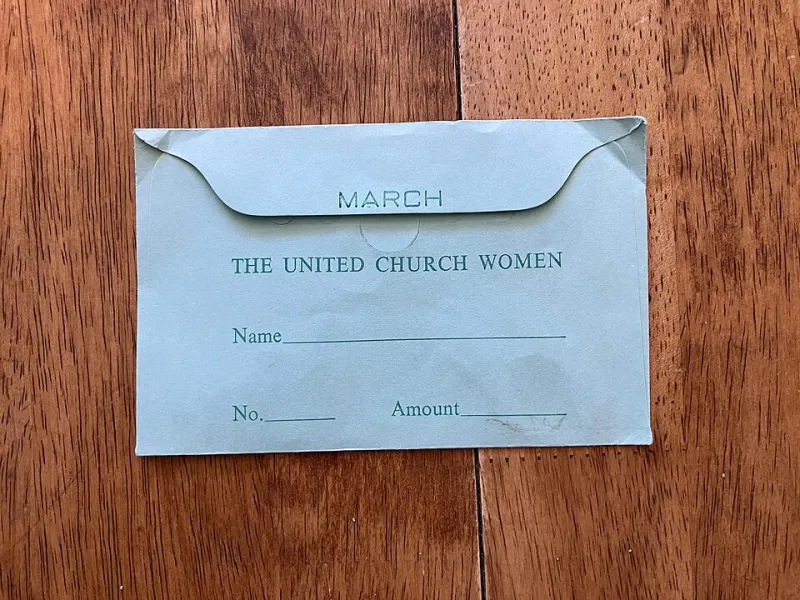
Photo: Gogerr, CC BY-SA 4.0, via Wikimedia Commons
Most Sundays, the offering plate is a one-way street. You put something in. It goes somewhere. You may hear about it later in a treasurer’s report, but the money itself disappears from your hand and becomes part of the church’s life.
Once a month at Faith Alive UMC, that street runs the other way.
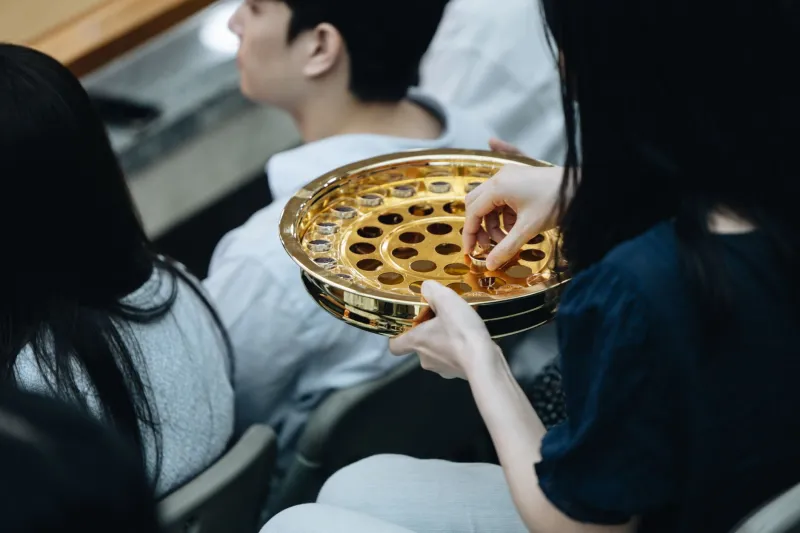
During the offering moment, the ushers still come forward. They still carry plates. But instead of collecting, they distribute. Adults receive a ten-dollar bill. Kids get a smaller amount, usually with a grown-up nearby to help keep track of it. There is no pledge card attached, no envelope to return, no follow-up form. The instruction is simple and strangely disarming: take this and spend it on someone else.
We call it the reverse offering, though that phrase makes it sound more clever than it feels in the moment. Really, it is just a monthly reminder that generosity is not only something we produce. It is also something we receive, and then pass along.
The Ushers’ Huddle
The practice starts before worship, in the same corner of the fellowship hall where the bulletins get stacked and the coffee gets its final check. The ushers count out bills, tuck them into envelopes, and go over the same short list of reminders.
Not everyone will want to take one. That is fine. Some people will pass it to the person next to them. Some will ask if it is a mistake. Some will immediately start whispering about who they know who could use it. The ushers have learned to make the offer lightly, without pressure, and to keep moving.
The only real rule is that the money is meant to leave the building. It does not come back in the plate. It is not a stealth stewardship campaign. It is not a test of who is generous and who is not. It is a small, budgeted line item that the church sets aside on purpose, month after month, so that a ordinary Sunday can include a little holy assignment.
That distinction matters. A lot of church money is asked for. This money is given away with no receipt required. The point is not to fund the church’s work. The point is to send the church’s people out into their week with their eyes a little more open.
A Ten-Dollar Assignment, Not a Test
The first time you receive one, it is easy to feel awkward. Ten dollars is not a fortune, but it is enough to make you think. Is this for real? Am I supposed to give it to a stranger? What if I forget? What if I spend it on something boring, like gas or a sandwich?
That awkwardness is part of the lesson. Most of us are more practiced at giving than receiving. We know how to drop something in a plate and keep walking. We are less sure what to do when something is placed in our hands and we are trusted to carry it somewhere good.
People have used the money in all kinds of ways. One person covered the next car’s coffee in a drive-thru line. Another bought a bag of groceries for a neighbor who had been sick. Someone else left a generous tip at a diner and slipped out before the server could ask questions. A few have given it to a grandchild and told them to find someone at school who needs it. One family keeps the bill on their kitchen counter all month as a reminder to pray about who might need it next.
None of these are dramatic. That is the point. The reverse offering does not ask anyone to solve a giant problem. It asks them to notice one small opening and walk through it.
The Awkward Part Is Kind of the Point
There is a moment in worship when the ushers step into the aisle and people realize what is happening. You can see it on faces: the slight pause, the raised eyebrows, the half-laugh. It is not the polished, quiet moment we usually associate with offering. It is a little rumpled. A little human.
And that may be exactly why it works.
So much of church life can become automatic. We stand, we sing, we listen, we put something in the plate. The reverse offering interrupts the autopilot. It turns a familiar moment into a question: What will you do with what you have been given?
It also gives people permission to talk about money in a way that is not anxious. We are not asking, Did you give enough? We are asking, What could ten dollars become in your hands this week? That is a different conversation. It is lighter. It is also more concrete.
What Comes Back Weeks Later
No one has to report back. That was decided early on. The moment you require a story, the gift starts to feel like homework. But stories come back anyway, usually in the parking lot or over coffee, usually with a shrug and a smile.
A retiree told an usher about buying lunch for a man at the bus station. A teenager used hers to pay for a classmate’s field trip fee, then asked her parents not to make a big deal of it. Someone else put the bill in a card for a neighbor who had just lost her husband. The card was mostly blank. The ten dollars was not the point. The noticing was.
Week after week, the same thing shows up in these stories: people do not need a lot of money to feel like they can do something. They need a nudge, a little permission, and a reason to look beyond their own schedule.
The Theology of Getting Handed Something
We talk a lot in church about giving. We talk less about receiving. But the gospel is full of people who are handed something they did not earn: a meal, a healing, a second chance, a place at the table. Faith is not only a project we perform for God. It is a gift we learn to hold with open hands.
The reverse offering is a small rehearsal of that. It puts us in the position of recipients. It reminds us that we are not the only ones doing the giving. It makes us ask what it means to be trusted with something small and asked to pass it on.
And it keeps us from taking ourselves too seriously. Ten dollars is not a grand gesture. It is a pocket-sized reminder that generosity can be ordinary. It can happen on a Tuesday. It can happen at a drive-thru. It can happen because someone at church put a bill in your hand and said, in effect, go be a blessing.
A Small Practice With Long Legs
After worship, the ushers pack up the leftover envelopes and the sanctuary returns to normal. The plates go back in the closet. The bulletins get recycled. The coffee hour moves toward its second pot.
But the money has already left the room. It is in pockets and purses and car consoles, waiting for the week to open up. That is the quiet hope of the reverse offering: that a small gift might travel farther than any of us can see, and that we might become the kind of people who are ready to receive it and pass it on.