The 6:45 Crowd: What Happens at Faith Alive UMC Before Anyone Sings
The parking lot at Faith Alive UMC is mostly empty at 6:45 on a Sunday. The streetlights are still on. There's dew on the windshield of exactly one car, and inside the building, a light is already burning in the fellowship hall.
If you've only ever arrived at 10:25, coffee in hand, you've missed the whole show.
Before the First Hymn
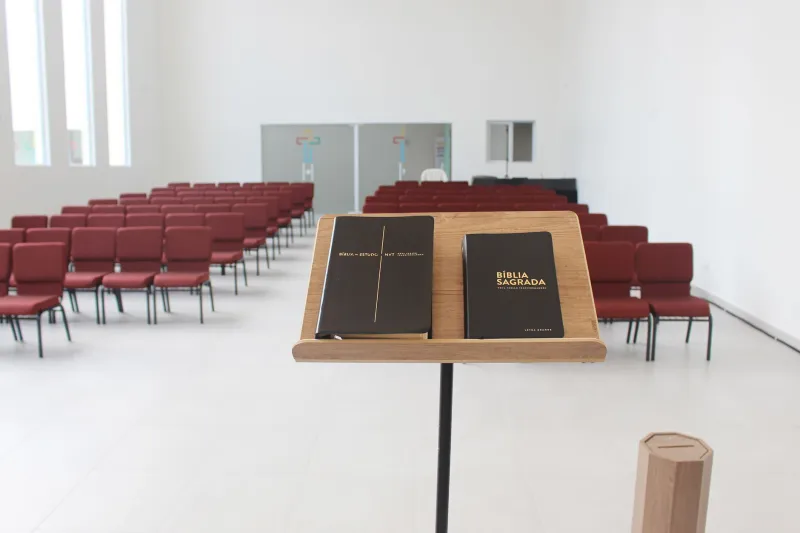
By the time the rest of us shuffle in, a small crew has already been at work for an hour and a half. They've unlocked doors, flipped breakers, tested the microphones, and discovered — again — that the thermostat has opinions. They've set out the coffee, laid out the bulletins, and arranged the chairs in that particular way that looks effortless and isn't.
They are not a formal committee. Nobody elected them. There's no badge, no roster pinned to a bulletin board, and definitely no applause. Ask them what they do and you'll get a shrug and something like, "Oh, I just get here early."
That "just" is doing a lot of heavy lifting.
The Ministry of Showing Up Again
Here's what strikes me about the 6:45 crowd: they don't do anything dramatic. No one is preaching. No one is leading a study. The work is folding chairs and checking bathroom supplies and untangling a cord that someone (we won't name names) wound up wrong last week.
But there's something quietly faithful about work that has to be redone every single week. The chairs get put away. The coffee gets drunk. Next Sunday, it all starts over. There's no finished product to point to, no before-and-after photo for the newsletter.
Methodists have a long history of this kind of thing — the ordinary, repetitive, unglamorous stuff of showing up. John Wesley talked about holiness in the everyday, not just in the big moments. I think he'd have understood a person who arrives in the dark to make sure the sanctuary is warm.
Why You've Probably Never Noticed Them
Part of the deal with good setup work is that it's invisible when it's done well. Nobody walks into a room and says, "Wow, the chairs are at a reasonable distance from one another." Nobody thanks anyone for a thermostat that's roughly the right temperature.
But you'd notice if it weren't done. You'd notice the missing bulletin, the dead microphone, the coffee that never got made. The 6:45 crowd absorbs that risk so the rest of us don't have to think about it.
And that's the tricky part. A ministry built on invisibility can start to feel like it's not really a ministry at all — just a chore that a few people happen to do. When that happens, the team gets smaller, and the same four people get tired, and eventually somebody burns out quietly in the parking lot.
How to Notice Without Making It Weird
You don't need to launch a committee or order matching T-shirts. A few small habits go a long way:
Learn a name or two. If you're not sure who sets up, ask. It's a low-stakes question, and it signals that you see the work.
Say thank you for something specific. Not just "thanks for all you do," which is lovely but vague. Try "thanks for making sure the coffee was hot" or "I noticed the chairs were already out when I got here." Specific gratitude lands differently.
Don't treat them like a facilities crew. They're not staff. They're volunteers who chose this. Treating them like the people who are supposed to handle the room is a fast way to make them feel invisible.
Ask before you offer advice. Someone who has arranged the same room for a decade probably knows a thing or two. Curiosity goes further than suggestions.
How to Join Without It Becoming Another Burden
The setup team would love help. What they don't need is one more person who signs up enthusiastically in September and disappears by November, leaving a gap in the rotation and a vague sense of guilt all around.
So here's a gentler on-ramp: shadow someone for one Sunday. Just one. Show up at 6:45, watch what happens, carry a chair, ask questions. No commitment, no uniform, no lifelong pledge. If it fits, you'll know. If it doesn't, you've still learned something about what Sunday morning actually costs.
If you're already stretched thin — and plenty of us are — there are other ways to support the team. Coordinate a once-a-month breakfast for them. Take a turn on the coffee prep so they can focus on the room. Or simply make it a habit to arrive ten minutes earlier than you need to, so you're not the person rushing past them with a half-apology.
The Last Ones Out, Too
One more thing about this crew: they're often the last ones out, too. After the final hymn, when the rest of us are heading to the parking lot and the brunch line, someone is stacking chairs, wiping counters, and turning off lights.
That's the whole shape of it. First in, last out. Not because they're more holy than anyone else, but because they decided this was their spot to serve — and then they kept deciding it, week after week, in the dark, with a folding chair in each hand.
If you see them on Sunday, say something. Better yet, show up early one week and lend a hand. The coffee's already on.