Turning the Lights Down Low: Building a Blue Christmas Service That Doesn’t Rush the Grief
Every December, someone in our pews is smiling at the right moments and counting the days until January.
Maybe it’s the first Christmas after a death. Maybe it’s a divorce, a diagnosis, a job that vanished in the spring, a kid who isn’t speaking to them, or a grief so old it has become part of the furniture. Maybe it’s none of those things and they simply cannot stand another chorus of a song about how wonderful everything is.
A Blue Christmas service — sometimes called a Longest Night service, usually held near December 21 — is a small, deliberate answer to that. It’s an hour, give or take, where the lights are low, the music is quiet, the words name hard things out loud, and nobody is asked to pretend.
If your congregation is thinking about offering one in 2026, this is the practical part. It is not complicated. It is mostly a matter of resisting the urge to fix people.
Start With the Room, Not the Liturgy
Most sanctuaries are built for celebration: bright, warm, forward-facing, loud. A Blue Christmas service works better when you change the room before you change a single word.
Turn the house lights down to about a third. Keep one or two warm lamps on so nobody feels like they’re sitting in a cave. If you have an overhead projector or screen, consider turning it off entirely for the night — a blank wall is more restful than a rotating slideshow.
If your building has a side chapel or a smaller room, use it. Twenty-five people in a room built for two hundred feels like a failure. Twenty-five people in a room built for forty feels like a gathering.
One small thing that gets overlooked: keep the thermostat a couple of degrees warmer than usual. Grieving bodies get cold. Nobody wants to spend the service with their coat on, deciding whether to leave at the second hymn.
Pick a Night, Then Say What It Is
December 21 is the traditional date, but a Tuesday or Thursday earlier in the month often works better for people who travel. Pick one and publicize it plainly. The invitation matters more than the production.
Bad: “A special holiday experience for those struggling to find joy.”
Better: “If this season is hard, you are welcome here. We will not ask you to be cheerful. Wednesday, December 17, 7:00 p.m.”
Put the invitation where people actually look — the newsletter, the sign out front, the local Facebook group, and, honestly, a printed card in the church office for whoever wanders in on a Tuesday afternoon. Do not require an RSVP. Do not call it a program.
Liturgy With Room in It
A Blue Christmas service usually runs thirty to forty-five minutes. That is enough. Resist the urge to fill it.
A simple shape that works:
- Gathering — a short welcome, no jokes, no “we’re so glad you’re here” hype. Something like: “We are here because this season is not easy for everyone. You don’t have to explain yourself tonight.”
- A reading of lament — Psalm 88 is the honest one; it ends in the dark and does not resolve. Pair it with something from Isaiah or Lamentations if you want a second voice.
- Naming — this is the heart of it. Set out a bowl of water or a basket of small stones. Invite people, as they are able, to come forward and name aloud or in silence what they are carrying. Keep it unhurried. Have someone softly playing or simply sit in silence.
- A short reflection — eight minutes maximum. One image, one promise. Not a defense of suffering. Not a fix.
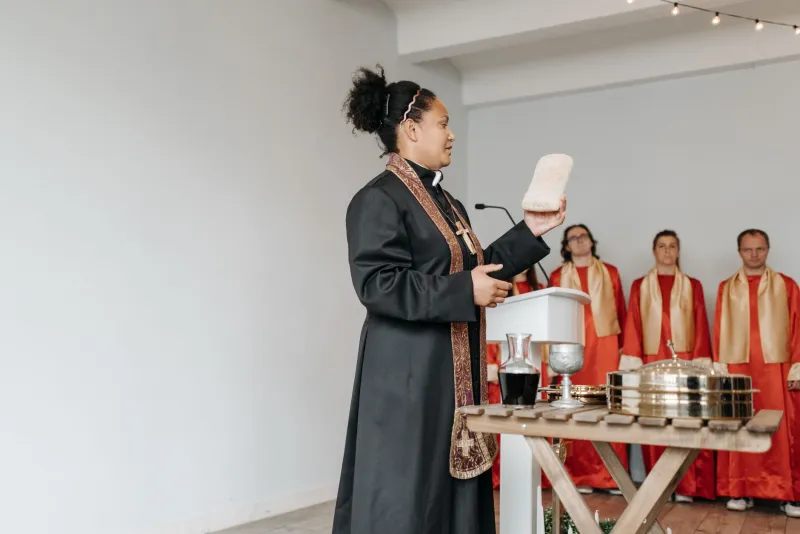
- Communion or a blessing — either works. If you serve communion, use something soft: a torn loaf, a common cup, no instructions about smiling.
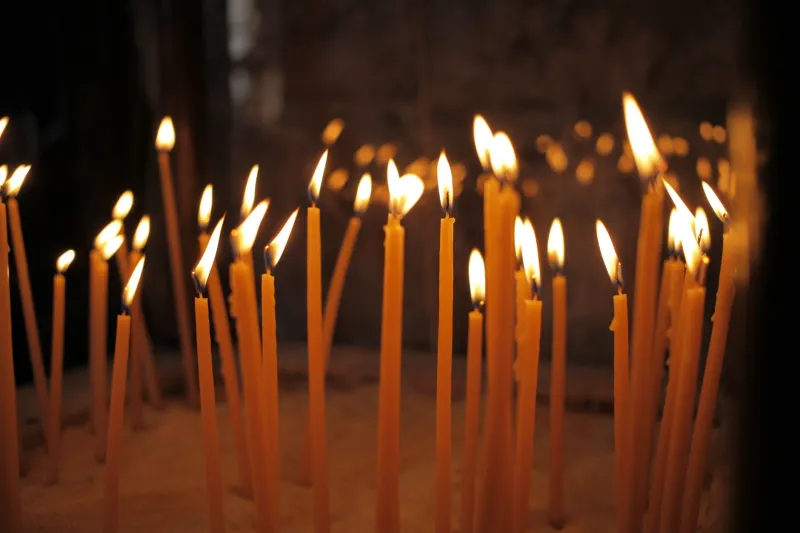
- Candle lighting — pass the light slowly from person to person rather than from the front. The slowness is the point.
- Sending — end without a pep talk. “Go in peace. You are not alone. The door is open on Sunday, and it’s open in February too.”
Print the whole service in large type. People who are grieving do not want to hold a bulletin and squint.
Music That Leaves Space
This is where well-meaning planners do the most damage. A soloist belting “O Holy Night” is a beautiful thing in the right room. In this room, it can feel like being shouted at.
Aim for: a single guitar or piano, unaccompanied voices, a cello if you’re lucky enough to have one. Choose Advent hymns over Christmas carols — “O Come, O Come, Emmanuel” carries lament inside it. “It Came Upon the Midnight Clear” has a verse about the world under sin’s crushing load that most congregations skip; sing it here.
And build in silence. Not the awkward kind that gets filled after four seconds. Put two full minutes of planned silence into the order of service and tell people it’s there. You will hear the building settle. Somebody will cry. That’s not a problem to solve.
Seating, and the Art of Not Being Trapped
Arrange chairs in a semicircle or in clusters of four, with wide aisles. Leave the back two rows empty on purpose. People who are unsure whether they can stay need a clear path to the door and a seat near it that doesn’t feel like a statement.
Have a greeter at the door who says something like “You’re welcome here. Sit wherever you’d like. There’s no wrong time to step out.” Then let them be quiet.
No name tags. No passing the peace. No turning to your neighbor and sharing a happy memory. Save that for Sunday.
Volunteers, and What to Ask Them to Do
You need fewer people than you think, and the roles are quiet ones:
- Two greeters who are comfortable with silence and tears.
- One reader with a steady, unshowy voice.
- One musician, ideally someone who can play softly and stop playing when the room needs it.
- Two people at the candles — practical help, not a photo op.
- A prayer team of two or three, sitting off to the side, available afterward for anyone who wants to talk. Brief them: listen, don’t advise, don’t hand out tracts, don’t say “everything happens for a reason.”
- One cleanup crew who understands the service may run long because someone needs to sit in the car for ten minutes first.
Recruit them in November. Pray with them beforehand. Remind them that the goal is presence, not hospitality performance.
What to Hand People on the Way Out
A single printed card. On one side, a short blessing. On the other, the church’s address, Sunday time, and a real phone number. Add one line: “If you’d like someone to pray with you this month, call.” And then make sure somebody actually answers.
Have cocoa and cookies in a nearby room, but don’t announce it as a fellowship hour. Just leave the door open. A few people will stay. Those few are the reason.
One Thing Not to Do
Don’t make the service a recruitment event. Don’t put a count in the annual report as a success metric. Don’t invite people so that they’ll come back in January.
Invite them because the night is long and no one should sit it out alone. That’s the whole ministry. Everything else is logistics.
If you’d like to help plan this year’s Longest Night service at Faith Alive UMC, the first planning conversation happens in early November — and yes, you can simply come and listen. That’s allowed here too.